
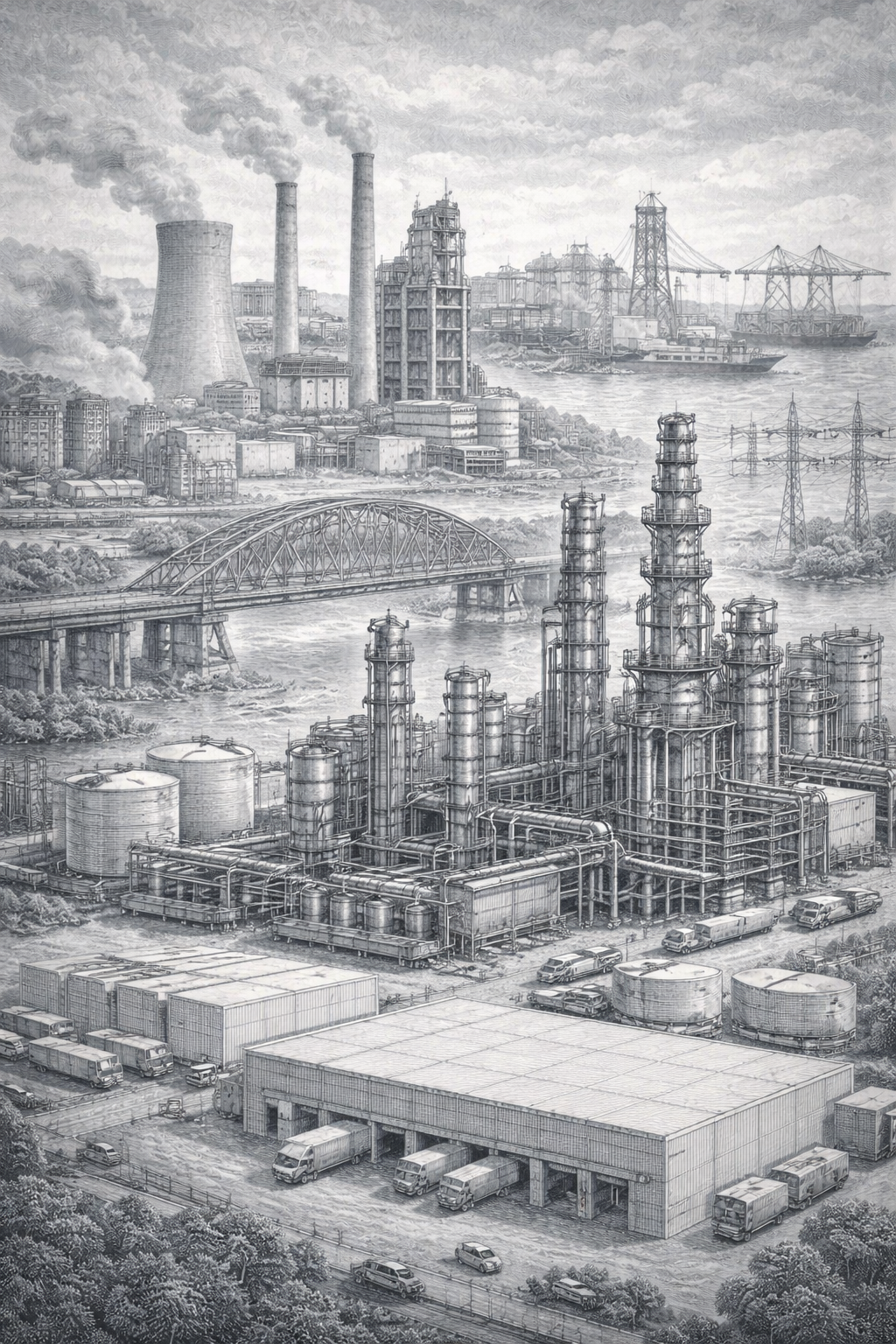
Evaluation of Existing Structures
Rezali provides engineering evaluation and structural assessment services for existing industrial structures and buildings. These services support owners and operators in understanding current structural performance, regulatory compliance, and suitability for continued or modified use.
Evaluations are conducted in accordance with applicable provincial engineering regulations, codes and standards, and recognized engineering practice, and may support operational decisions, upgrades, or corrective actions.
-
Depending on project needs, Rezali’s evaluation services may include:
Structural diagnosis of performance issues
Assessment of vibration, excessive deflection, cracking, or other serviceability-related concerns affecting industrial structures and equipment supports.Code-based evaluation of existing buildings and structures
Evaluation of industrial buildings, including large-roof structures, for snow loads, wind loads, and other environmental effects in accordance with applicable codes and site-specific conditions.Assessment for changed or increased demands
Evaluation of existing structures where operational requirements have changed, such as:Added equipment or loads
Modified usage
Updated safety or performance expectations
Engineering judgement and recommendations
Identification of structural deficiencies, reserve capacity, and practical options for mitigation or improvement.
-
Clients typically request this service when:
Existing structures exhibit unexpected behavior (vibration, movement, distress)
Operational changes are planned
Regulatory or insurance reviews are required
Environmental loads have increased due to code updates or site conditions
Structural upgrades or life-extension decisions are being considered
-
Scope and objective definition
Clarify the purpose of the evaluation and applicable regulatory context.Document review and data collection
Review available drawings, calculations, and historical information.
Site observations may be conducted as required.Engineering analysis and assessment
Perform analytical evaluation using current codes, standards, and engineering judgement, accounting for the nature of existing construction.Findings and conclusions
Identify observed issues, compliance status, and structural performance relative to the defined objectives.Recommendations (as applicable)
Provide engineering recommendations for monitoring, mitigation, repair, or upgrade where warranted.
-
Clear understanding of structural condition and performance
Actionable, defensible engineering conclusions
Alignment with regulatory and code requirements
Support for informed operational or capital decisions
-
Does not constitute a general building inspection
Does not guarantee future performance beyond stated assumptions
Does not replace ongoing maintenance or monitoring unless explicitly defined
-
Existing structures are often subjected to:
Loads and conditions not considered in the original design
Evolving codes and standards
Changing operational requirements
A structured engineering evaluation reduces uncertainty, manages risk, and supports safe, compliant, and cost-effective decisions.
-
This service may be delivered under different Engineering Service Levels, depending on scope:
L1 — Review and validation of third-party structural assessments
L3 / L4 — Rezali-led evaluation with external drafting or detailing
L5 — Full evaluation, analysis, and upgrade design
→ View our Engineering Service Levels & Professional Responsibility Framework